



 Learn about money together!
Each month, Barcroft will share a simple Family Money Challenge.
These challenges are designed to encourage children and adults to talk about money together and practise important skills including budgeting, saving, comparing prices, needs and wants, value for money, sustainability and making informed financial decisions.
The challenges are completely optional and families do not need to spend any money to take part. We will never ask children to share private information about their family's finances.
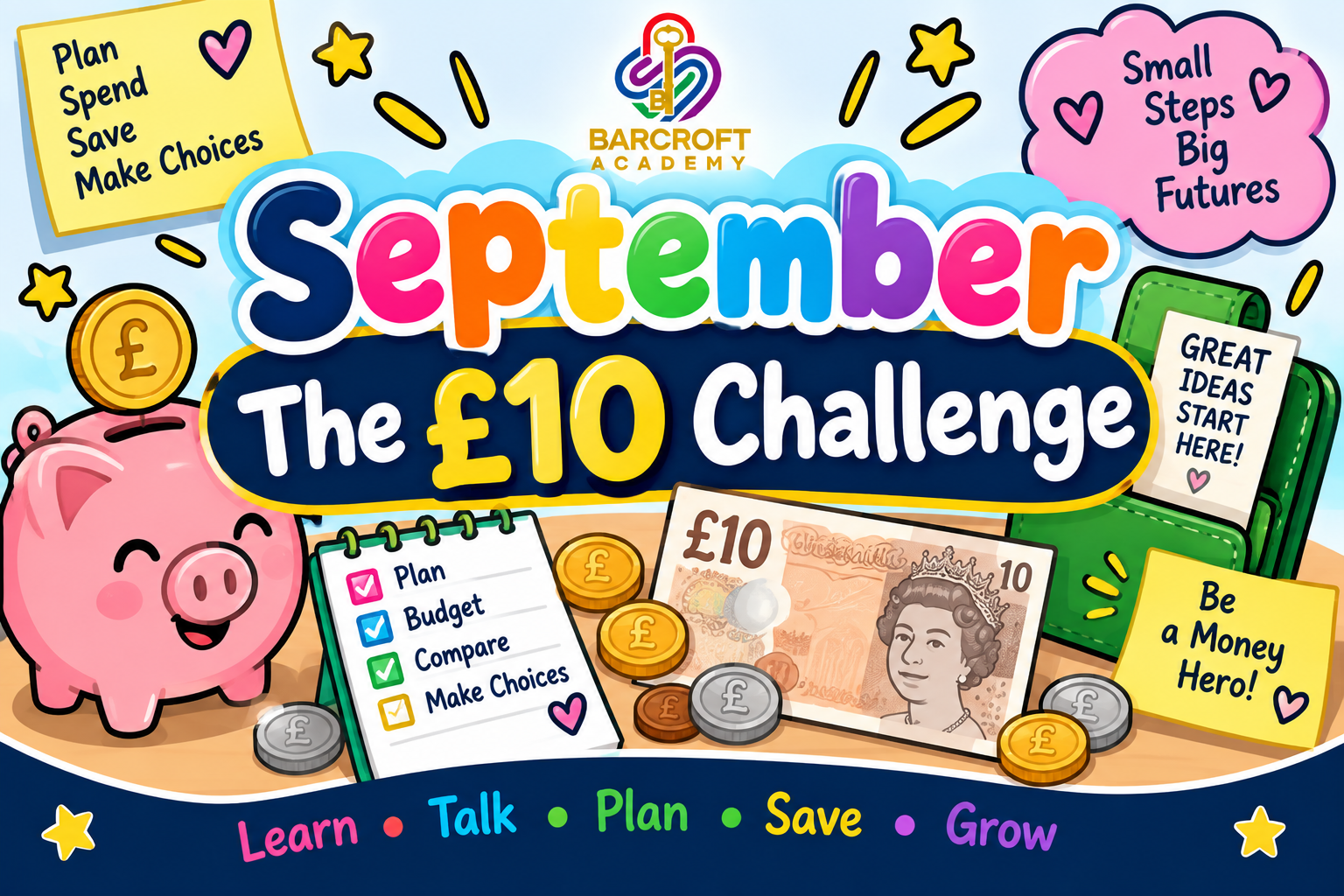
Your challenge:
Imagine you have £10 to plan a family treat.
It could be a movie night, picnic, games evening or something completely different.
Write down everything you would like and estimate how much each item would cost. Can you keep your total below £10?
Talk about: What did you choose? Did you have to remove anything? How did having a budget change your decisions?
Money skills: Budgeting • Choices • Needs and wants • Value for money
Financial support for Parent and Carers
We understand that families can sometimes face financial challenges, and support is available. If you are worried about the cost of living, benefits, debt, budgeting or finding additional financial help, the trusted organisations below offer free, confidential and impartial advice.
They can help you check if you are entitled to benefits, search for grants, create a budget or access debt support.
Helpful Financial Support Websites
- MoneyHelper – Free government-backed advice on budgeting, benefits, pensions, debt and managing your money.
- Citizens Advice – Independent advice on benefits, debt, housing, employment and consumer rights.
- Turn2us – Check your benefit entitlement, search for charitable grants and access practical financial support.
- StepChange Debt Charity – Free, confidential debt advice and personalised support for anyone struggling with money or debt.
- GOV.UK – Check Benefits and Financial Support – Find out what financial support and benefits you may be eligible to claim.
- GOV.UK – Cost of Living Support – Information on budgeting, savings, debt support and other help available with the cost of living.
- National Debtline – Free, independent and confidential advice for people dealing with debt and money worries.
Our Vision – We believe that all children should be given the best chance for a rewarding future, in work and in life, no matter where they start their journey.
Our Mission - Our mission is to empower all children to discover, develop their understanding of money and saving to ensure they are prepared for a life in society.
What is financial Education?
Financial education teaches the skills and attitudes necessary to understand money and finance. Developing an understanding of finance equips us with the knowledge and skills we need to manage money effectively. It helps us to make well-informed choices and encourages financially responsible behaviour.
Educating children about finance at a young age aims to deepen their knowledge of money in the real-world. It develops their ability to manage money as they grow older and gives them the knowledge and confidence to make important financial decisions.
Young Money, and the APPG on Financial Education for Young People, have successfully campaigned to include financial education on the secondary school curriculum – placed onto the Citizenship curriculum in September 2014 - and continues to campaign for the same in primary
As a school we made the decision to work alongside Young Money to develop a finance curriculum from Early Years to Year 6.

What your child will learn?
Early Years Foundation Stage (EYFS)
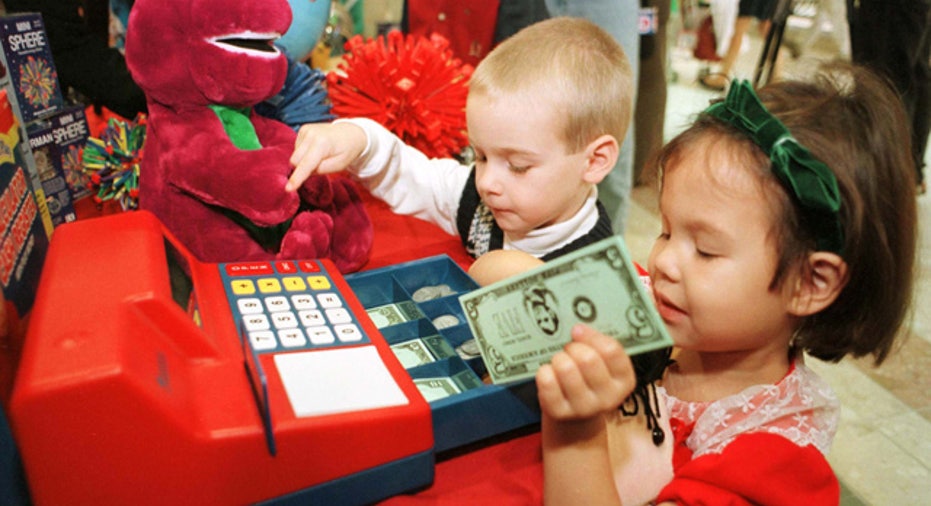
Our youngest learners begin to develop an early understanding of money and making choices through play and everyday experiences. They will learn about:
- Recognising and talking about coins in role-play activities.
- Understanding that money is used to buy things.
- Exploring the difference between things we need and things we want.
- Taking turns, sharing and making simple choices.
- Looking after their belongings and school resources.
- Beginning to understand that we cannot always have everything we want.
Key Stage 1 (Years 1 & 2)
Children continue to develop their understanding of money and begin making simple financial decisions. They will learn about:
- Recognising and naming coins and notes.
- Counting money and finding simple totals.
- Understanding the difference between needs and wants.
- Saving money for a purpose.
- Making sensible spending choices.
- Looking after personal belongings and understanding value.
- Beginning to understand where money comes from.

Lower Key Stage 2 (Years 3 & 4)
Children begin applying their financial knowledge to real-life situations and develop confidence in managing money responsibly. They will learn about:
- Budgeting and planning spending.
- Understanding value for money.
- Making wise purchasing decisions.
- Fairtrade and ethical spending.
- Enterprise and fundraising activities.
- Banking and different ways of managing money.
- Income, spending and saving.
- Comparing prices and understanding best value


Upper Key Stage 2 (Years 5 & 6)
Children deepen their financial understanding and prepare for future financial responsibilities. They will learn about:
- Saving money and understanding interest.
- Borrowing and lending responsibly.
- Taxes and why they are important.
- Careers, earnings and different types of income.
- Online banking, digital payments and staying safe online.
- Recognising scams and protecting personal information.
- Financial planning and making informed financial decisions.
- Setting financial goals and understanding the importance of long-term planning.
Through these experiences, our aim is for every child to leave Barcroft Acadmy with the knowledge, confidence and skills to make informed financial decisions throughout their lives.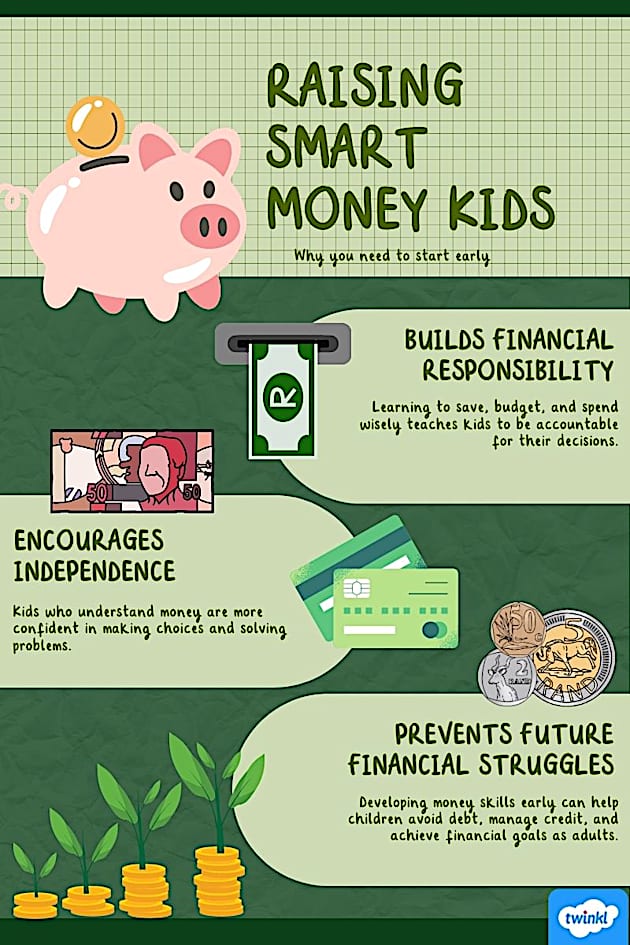
Family Savings Challenges
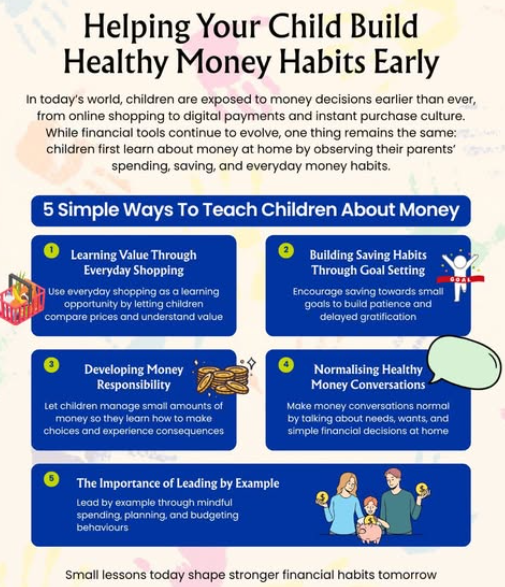
Why not take on a family savings challenge together? Setting a shared savings goal is a fun and practical way to encourage children to develop positive money habits while helping the whole family save towards something special.
Whether you're saving pennies each day, taking part in a no-spend challenge or working towards a family treat, these activities help children understand the importance of budgeting, planning ahead and making thoughtful spending choices. Explore the trusted resources below to find a savings challenge that works for your family.
https://www.natwest.com/savings/savings-guides/money-saving- challenges.html https://www.hsbc.co.uk/savings/challenges-to-help-you-save-money/
 https://www.emmasdiary.co.uk/pregnancy-and-birth/budgeting-as-a-new-parent/savings-challenges-for-parents-in-2026
Financial Education Resources for Home
Supporting children to develop positive money habits is most effective when learning continues both at school and at home. The resources below provide a range of engaging activities, games, guides and practical advice to help children and families build confidence in managing money, making informed financial decisions and understanding the value of saving and spending. We encourage parents and carers to explore these trusted resources together with their child to continue developing important financial skills for life.
https://www.valuesmoneyandme.co.uk/teachers/i-want-it-ks2
https://natwest.mymoneysense.com/home/
http://www.nicurriculum.org.uk/curriculum_microsite/financial_capability/key_stage1/resources/
https://www.lifesavers.co.uk/schoolresources
https://www.hsbc.co.uk/financial-education/
https://signup.gohenry.com/uk/parent-details
https://schools.beano.com/lesson_plan_category/moneyandme/
https://online.maryville.edu/online-bachelors-degrees/accounting/money-management-lessons-kids/
https://barclayslifeskills.com/educators/lessons/?category=category-383242&age=age-7-11
https://www.mybnk.org/our-work/financial-education/money-twist-ks1/
Children's Money Zone 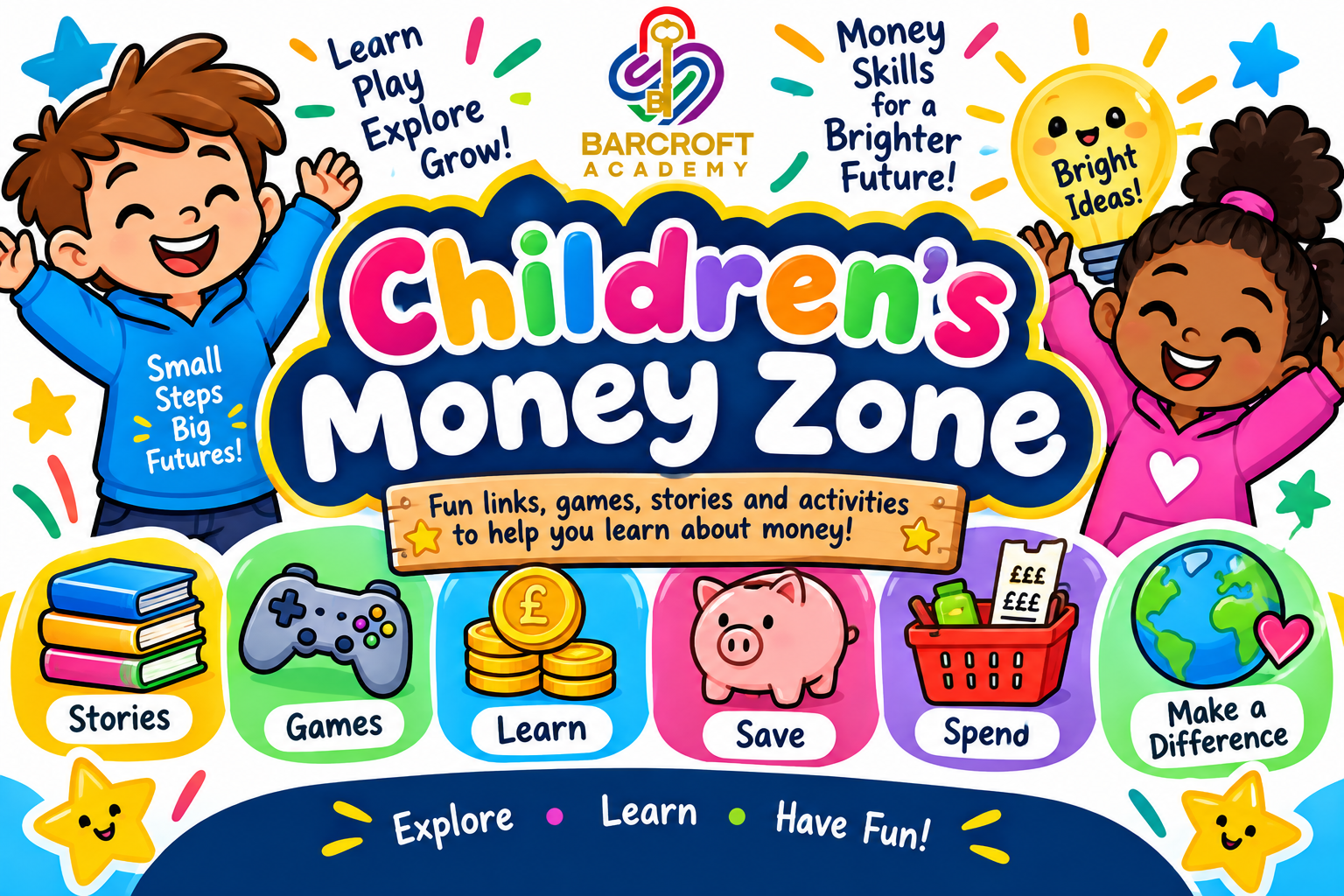
1. Money Heroes – Games, Activities & Stories | Ages 3–11
Explore Money Heroes
Free games, stories and activities created specifically to help primary-aged children learn about money. Children can explore earning, saving, spending, needs and wants and making sensible financial choices. Some resources require a free parent account.
2. Ed and Bunny Save Some Money Game | Younger Children
Play through Money Heroes
Help Bunny earn and save enough money for something he wants. A fun introduction to recognising coins and understanding the relationship between earning, saving and spending.
3. Ed and Bunny Spend Some Money | Ages 3–7
Read Ed and Bunny Spend Some Money
A child-friendly Money Heroes story exploring using money, keeping track of money and understanding the difference between needs and wants. A free Money Heroes account is required to access the resource.
4. Ed and Bunny Spend Invisible Money | Ages 3–7
Explore Ed and Bunny digital-money resources
A story and accompanying activities designed to help younger children understand digital money and electronic payments—particularly useful because children may see adults tapping cards or phones without seeing physical money changing hands.
5. Super Stories for Money Heroes | Primary
Read Super Stories for Money Heroes
A collection of short stories where children encounter different money challenges. The stories explore spending, saving, managing risks and emotions around money and becoming a thoughtful consumer.
6. Become a Money Hero! | Home Activity
Try the Money Hero Home Activity
Children become a "Money Hero" and think about how they could help make sensible money decisions at home. A useful way of developing decision-making and critical-consumer skills.
7. Topmarks Coins Game | Ages 4–10
Play the Topmarks Coins Game
A simple interactive game using British coins. Children can practise recognising, sorting, ordering and counting coins, with different levels of difficulty available.
8. Pocket Money Maths Board Game | KS1
Try Pocket Money Maths
A free printable game where children collect and spend pocket money while keeping track of their balance. It combines financial understanding with addition and subtraction using money.
9. Party Planning Budget Challenge | Around Years 3–4
Try the Party Planning Budget Game
Children receive a set budget and must decide what they can afford for a pretend party. This introduces budgeting, spending choices and working within a financial limit while practising pounds and pence.
10. MoneyHelper – Learning About Money by Age | Ages 3–11
Explore Money Learning by Age
This is one for children and adults to explore together. It provides age-appropriate ideas covering money through play, needs and wants, saving, budgeting, bills, credit, gaming and digital spending.
I particularly like Money Heroes for Barcroft because it includes games, eBooks, home activities and accessible resources, and it is designed specifically around primary Financial Education rather than simply teaching the maths of coins.
Here are some interactive videos and games for children to access. Have fun!
| Resource | What children will learn |
|---|---|
| Money Heroes – Ed and Bunny Game | A fun interactive game for children aged 3–11 that teaches saving, spending, needs and wants, and making sensible money choices through engaging activities. |
| NatWest MoneySense Games | Free games for children covering topics such as budgeting, saving, recognising scams, banks and spending wisely. Suitable for Key Stage 1 and Key Stage 2. |
| Teaching Money – Interactive Money Games | Interactive games that help children recognise UK coins and notes, count money, calculate totals and work out change. Ideal for practising maths and money skills. |
| Nationwide Education – Money Wiz Game | A free interactive board game for children aged 7–11 that develops budgeting, saving and financial decision-making through realistic scenarios. |
| MoneyHelper – Talk Learn Do Activities | A collection of free interactive family games, quizzes and practical activities that encourage children to learn about saving, spending and making good money choices at home. |
These resources are provided by trusted organisations including Young Enterprise, NatWest, Nationwide Building Society and MoneyHelper
Talking About Money at Home
Why talk about money?
Talking about money at home can help children develop positive financial habits from an early age. Everyday conversations about shopping, saving, working, bills and making choices can help children understand that money is limited and that we all have to make decisions about how we use it.
You do not need to share private information about your family's finances to teach your child about money. Simple conversations and imaginary examples can help children develop their confidence and understanding.
Research-based guidance from MoneyHelper encourages families to involve children in age-appropriate conversations and everyday decisions about spending and saving.
Try these conversation starters
For younger children:
- What do we use money for?
- Where do you think money comes from?
- What is the difference between something we need and something we want?
- If you had £5, what would you do with it?
- Why might somebody choose to save their money?
- What happens to our money when we buy something using a bank card?
- If two toys are the same but one costs less, which might be the better choice?
- Why can't we buy everything that we want?
For older children:
- If you were given £20, how much would you spend and how much would you save?
- What does having a budget mean?
- Why do people go to work?
- What is the difference between a wage and a salary?
- Why do adults have to pay bills?
- What might happen if somebody spends more money than they have?
- What is a loan and why does borrowed money usually have to be paid back?
- What does value for money mean?
- Is the cheapest option always the best value?
- How could advertising influence what you want to buy?
- What could you do if you really wanted something but couldn't afford it yet?
- Why might somebody keep some money for an emergency?
- How can we stay safe when spending money online?
- What skills might help you get a job when you are older?
- If you started your own business, what would you sell and what would you need to pay for?
Make money conversations part of everyday life
Financial Education does not have to feel like homework. Try involving children in ordinary situations: compare two prices at the supermarket, give them an imaginary budget to plan a meal, discuss why you are saving for something, let them help write a shopping list or talk about why you chose not to buy something.
These small experiences help children understand that managing money involves planning, making choices, comparing options and sometimes waiting for something we want. MoneyHelper similarly recommends using ordinary experiences such as shopping to teach children about costs, needs, wants and avoiding unnecessary purchases.